


The future of your workforce: 5 reasons for more 50-plus potential
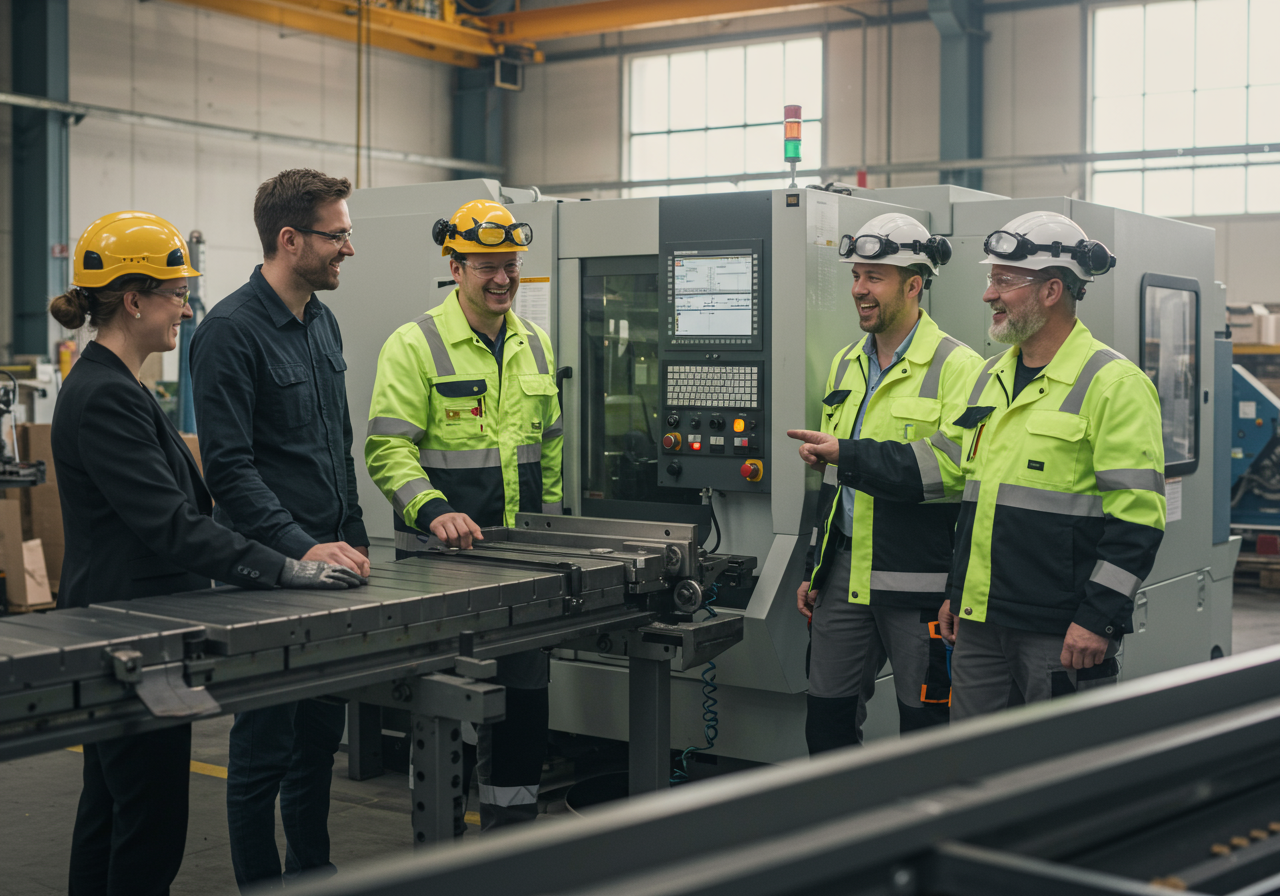
This scene plays out every day in Swiss companies, but many employers overlook the huge potential that lies dormant in their 50-plus workforce. While the skills shortage is becoming ever more pressing and over 70% of companies in Switzerland see demographic change as a risk (Adecco, 2023), the solution is often right in front of their eyes: in the experience, knowledge and loyalty of their older employees.
More than experience: the underestimated loyalty and durability of older employees
If young talents change employers after just two years, the 50-plus employees stay. This consistency is not a matter of course, but an enormous competitive advantage that many companies do not yet fully appreciate. Older employees are more loyal than average (JOIN, 2022) and bring stability to the team, which has a direct impact on the quality of work and the working atmosphere.
Maria Schneider, a 56-year-old accountant from Basel, has been working for the same company for 18 years. Not only does she know every business process inside out, she has also successfully accompanied three system changes and trained younger colleagues in the process. Her loyalty is not only reflected in her long service to the company, but also in her above-average commitment: she stays longer when important projects are due and proactively makes suggestions for improvement based on years of observing operational processes.
This loyalty has a measurable impact on company costs. While turnover among younger employees is constantly increasing and companies have to invest an average of CHF 20,000 to 50,000 per new hire, senior talent offers a reliable constant. They not only reduce recruitment costs, but also act as a living knowledge database that prevents valuable expertise from being lost when employees leave.
But loyalty does not mean standing still for 50-plus professionals. On the contrary: their willingness to develop further and take on new challenges is often underestimated. They have a special form of motivation - one that is not based on rapid career advancement, but on the desire to complete their life's work and pass on their knowledge.
Saving costs through flexibility: the new working model for 50plus
The traditional idea of working until 65 and then abruptly retiring is a thing of the past. Flexible part-time models for older people are particularly successful (Right Management, 2023) and open up completely new opportunities for both employers and employees. This flexibility is not a concession to age, but a strategic investment in the future viability of the company.
An electrician from Zurich has only been working three days a week since his 62nd birthday - and is more productive than ever. The reduced working hours have not only increased his motivation, but also allow him to focus more intensively on complex projects and mentor younger colleagues. His employer benefits twice over: personnel costs are reduced, while valuable specialist knowledge remains within the company and is passed on to the next generation.
These flexible working models are invaluable, especially in times of skills shortages. Instead of completely dispensing with the know-how of experienced employees, companies can develop customized solutions: Project-based collaboration, consulting work, mentoring programs or seasonal assignments. For example, a retired civil engineer can work in an advisory capacity during the planning phase of new projects without making a long-term commitment.
The cost efficiency of these models is impressive. While a full-time employee can quickly cost CHF 100,000 or more per year with all ancillary costs, flexible 50-plus specialists can be deployed specifically where their knowledge is needed most. They bring with them an efficiency that is based on decades of experience - fewer errors, faster problem solving, more direct communication.
It becomes particularly exciting when this flexibility is combined with modern forms of work. Working from home, digital collaboration and project-based teams are no longer just for the younger generation. Many 50-plus professionals have successfully adopted these forms of work and use them to optimize their work-life balance without losing productivity.
Invisible barriers: How prejudices about the 50-plus generation hinder progress
Despite their proven skills, older workers are often overlooked due to preconceptions surrounding their IT skills and adaptability (Hays, 2023). These unconscious barriers not only cost companies valuable talent, but also unnecessarily exacerbate skills shortages. More than 60% of over 50s do not believe they will be offered the opportunity to work longer (Deloitte, 2023) - an alarming signal that shows how ingrained these prejudices are.
The cliché of the tech-shy older employee persists, but it has long since ceased to correspond to reality. A 58-year-old mechanic from Bern learned how to operate a new CNC machine on his own during the pandemic and now programs complex components that impress his younger colleagues. His approach differs from that of digital natives: while they navigate intuitively through menus, he works in a systematic and structured way - often with better results.
This systematic way of working is not a disadvantage, but an enormous advantage in complex work processes. Older employees bring with them a thoroughness that is often lost in the fast-paced world of work. They read instructions in full, test systems extensively and document their work steps - qualities that are invaluable, especially in safety-critical areas or complex projects.
Younger employers often fear that older employees lack IT skills (Hays, 2023), but overlook the fact that today's 50-plus generation has already spent a large part of their working life with computers. They have not only experienced digitalization, they have actively helped to shape it. Their IT skills may be different to those of Generation Z, but they are often more in-depth and practice-oriented.
Another prejudice concerns the alleged resistance to change. In reality, the picture is completely different: Those who have 30 or 40 years of professional life behind them have already successfully mastered countless changes. These people have survived company mergers, implemented new technologies and adapted to changing market conditions. Their apparent caution when it comes to innovations is often not stubbornness, but the result of experience - they can recognize potential pitfalls earlier and help to avoid costly mistakes.
The power of mixed teams: Innovation boost through age diversity
The real magic happens when different generations work together. The mix of young and experienced team members promotes innovative problem solving and stronger customer loyalty (OECD, 2020). This age diversity is not a nice side effect, but a decisive competitive advantage that can exponentially increase the innovative power of companies.
In an architectural office in St. Gallen, a 61-year-old project manager works closely with a 26-year-old architect. While the young colleague juggles with the latest CAD programs and produces creative 3D visualizations, the experienced architect contributes practical know-how: he knows which solutions work in reality, is familiar with the pitfalls of different building materials and has a feel for the needs of clients. The result is projects that are both innovative and practical to implement.
This collaboration works both ways. The younger employees bring in fresh ideas, new technologies and different perspectives, while the older colleagues act as filters and amplifiers. They can assess which ideas are actually feasible and help to modify innovative approaches so that they work in practice.
This combination is particularly valuable in customer contact. While young employees often have a natural connection to customers of the same age, experienced professionals can also reach and understand older customers better. An insurance advisor with 35 years of professional experience speaks a different language than a fresh university graduate - and thus reaches customer groups that are difficult for younger colleagues to access.
An employment rate of 80% for older workers could increase GDP per capita by 20% by 2050.
The OECD has calculated that an employment rate of 80% for older workers could increase GDP per capita by 20% by 2050 (UNECE, 2023). These figures illustrate the huge economic potential that lies in making the most of mixed-age teams. It is not just about preserving knowledge, but about creating new value through the intelligent combination of different perspectives and horizons of experience.
Success stories from the field: When senior talents take off
Theory is one thing, but practice shows most clearly the potential of the 50-plus generation. CARIFY, an innovative Swiss company, uses senior talents as reliable drivers to successfully bridge staff shortages. This success story is an example of how well thought-out concepts for older employees can not only demonstrate social responsibility, but can also be highly successful economically.
The drivers at CARIFY have qualities that are particularly valuable in the fast-moving gig economy: Reliability, punctuality and strong customer service. They know the roads from decades of experience, drive proactively and safely, and treat the vehicles entrusted to them with respect. These are qualities that are not automatically expected of younger drivers.
Another impressive example is a 64-year-old IT specialist from the Zurich region who led an innovative digitalization project for his former company after his official retirement. His decades of experience with various systems and his deep understanding of business processes enabled him to develop a solution that was perfectly tailored to the company's needs. Younger IT experts might have found a more technically elegant solution, but they would not have had the institutional knowledge to integrate the solution so seamlessly into the existing processes.
In a production company in eastern Switzerland, a 58-year-old skilled worker took over the training of an entire team for a new production line. His ability to explain complex technical issues in an understandable way and to respond to the individual learning styles of the team members made the training a complete success. The production line was running smoothly after just two weeks - an introduction of this kind normally takes several months.
These success stories have one thing in common: they show that senior talent is not only valuable as a store of knowledge, but can also actively contribute to the further development of companies. They bring with them a special form of innovative strength - one that is based on experience, prudence and a deep understanding of practical contexts.
The economic dimension: convincing figures
The demographic trend in Switzerland is unstoppable: the population is getting older, birth rates are falling and, at the same time, life expectancy is rising continuously. Viewing this development as a threat is not enough. Companies that focus on the potential of the older generation at an early stage will gain a decisive competitive advantage.
The figures speak for themselves: over 70% of companies in Switzerland see demographic change as a risk (Adecco, 2023), but only a few have taken concrete measures to counter this perceived risk. The solution is obvious: instead of viewing the ageing society as a problem, companies should use it as an opportunity.
The costs of integrating senior talent are manageable, but the benefits are enormous. While the induction of a new, young employee often takes months and ties up considerable resources, experienced specialists can often become productive immediately. They know the industry, understand business contexts and bring with them a network that can be valuable to the company.
At the same time, they reduce the risk of making the wrong decisions. Their experience helps to avoid costly mistakes that younger employees might make due to inexperience. An experienced project manager recognizes potential problems earlier, an experienced technician finds the cause of faults more quickly and an experienced salesperson can better assess customer needs.
The way forward: concrete steps for employers
Awareness alone is not enough - companies need to take concrete steps to tap into the potential of the 50-plus generation. The first step is to review their own recruitment practices. Are older applicants unknowingly disadvantaged? Are there hidden age limits in job advertisements? Are the selection criteria fair and age-independent?
The second step is to create age-appropriate workplaces. This does not mean that special consideration must be given, but that workplaces are designed in such a way that they are optimal for all age groups. Ergonomic workstations, good lighting and low-noise environments benefit all employees, but are particularly important for older employees.
The third step is to develop flexible working models. Not every 55-year-old wants to work reduced hours, but the option should be available. At the same time, project-based collaboration, consulting activities or mentoring programs can be developed that allow employees to continue to benefit from the expertise of experienced employees even after they have officially retired.
Conclusion: Seize the opportunity
The future belongs to companies that utilize the full spectrum of available talent. Senior talent is not the solution to all HR problems, but it is an important building block for a resilient and sustainable workforce. Their loyalty, experience and reliability perfectly complement the energy and creativity of younger employees.
By activating the potential of the 50-plus generation, companies can not only counteract the shortage of skilled workers, but also create a more stable and innovative working culture. The demographic trend cannot be stopped - but it does not have to be a risk. On the contrary: it can become the greatest opportunity that Swiss companies will have in the coming decades.
The time to act is now. While other companies are still discussing the challenges of demographic change, you can already set the course for a successful future. Discover the untapped potential of senior talent and make your company fit for the working world of tomorrow.
Are you ready to discover the potential of the 50-plus generation?
Register with SeniorsAtWork today and find the experienced professionals who will drive your business forward.
Register now and get started!Sources and further studies:
- Adecco (2023): Study on demographic trends in Swiss companies
- Deloitte (2023): Workers wanted - The Deloitte Global Report on the Ageing Workforce
- Hays (2023): Study on prejudices against older employees
- JOIN (2022): Analysis of the loyalty of older employees
- OECD (2020): Promoting an Age-Inclusive Workforce
- Right Management (2023): Silver Workforce Study
- UNECE (2023): Economic impact of employing older workers